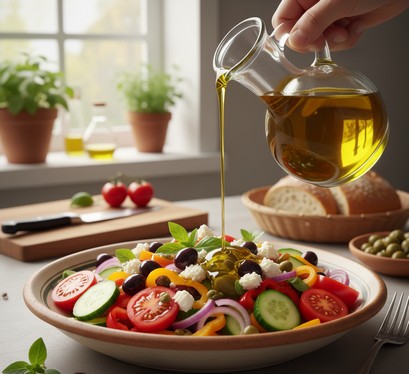
Extra virgin olive oil is much more than a simple ingredient in Mediterranean cooking; it’s its heart and soul. From fresh salads to slow-cooked stews, this “liquid gold” has become a fundamental pillar of one of the world’s healthiest and most sustainable eating patterns. But what makes olive oil so special in this diet? The answer lies in its unique nutritional properties and its role in preventing chronic diseases.
The Mediterranean diet, recognized by UNESCO as an Intangible Cultural Heritage of Humanity, is based on the consumption of fruits, vegetables, legumes, whole grains, nuts, and, of course, a generous amount of olive oil. This eating model not only helps maintain a healthy weight but is also associated with a lower risk of cardiovascular diseases, type 2 diabetes, and certain types of cancer. The secret is in the antioxidants and monounsaturated fatty acids present in olive oil, which protect cells from oxidative damage and help reduce “bad” cholesterol (LDL).
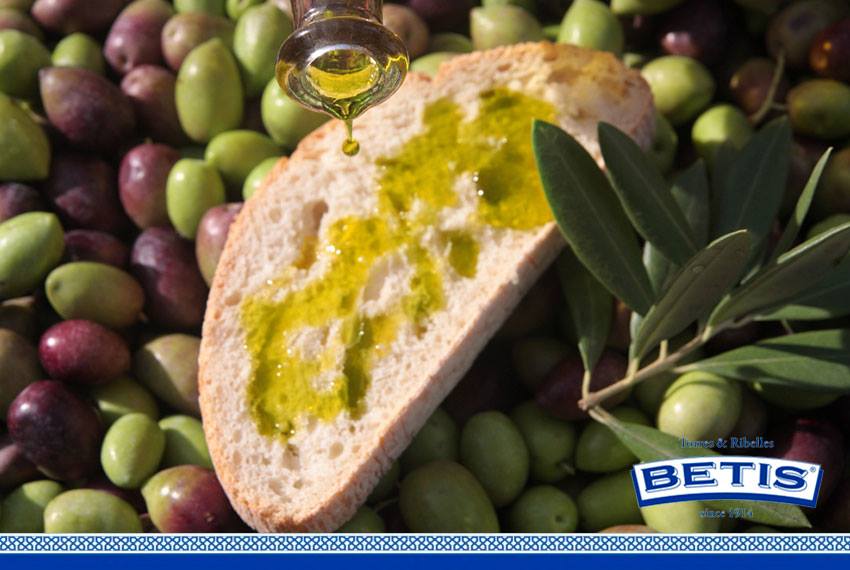
The regular use of olive oil in daily cooking not only provides health benefits but also enhances the flavor of food. Its fruity, peppery, and bitter notes, depending on the variety, add a unique touch to each dish. For example, an oil with more intense notes is perfect for toasted bread with tomato, while a milder one perfectly complements steamed fish. At Torres y Ribelles, we have perfected the art of producing oils that not only nourish your body but also delight your palate, honoring the tradition and essence of authentic Mediterranean cuisine.